
Vestibular rehabilitation in Coimbatore focuses on improving balance, coordination, and stability in individuals experiencing dizziness, vertigo, and other balance-related difficulties. Problems affecting the vestibular system can cause unsteadiness, difficulty walking, and discomfort during head or body movements.
At Physio Health Care International, vestibular rehabilitation focuses on improving balance control, reducing movement-related dizziness, developing coordination, and helping individuals perform daily activities with greater confidence through personalized rehabilitation programmes.
Our approach is based on individual assessments, symptoms, medical conditions, and recovery goals.
What Is Vestibular Rehabilitation?
Vestibular rehabilitation is a specialized form of physiotherapy designed to address balance and movement difficulties associated with disorders of the inner ear and vestibular system.
It involves gaze stabilization exercises, balance training, coordination activities, habituation exercises, and walking practice to help the body adapt to vestibular problems.
Each treatment programme is customized according to the patient's symptoms, balance difficulties, and functional limitations.
Conditions Treated with Vestibular Rehabilitation
Vestibular physiotherapy may help individuals manage symptoms associated with various conditions, including:
- Benign Paroxysmal Positional Vertigo (BPPV): Specific repositioning techniques to manage positional vertigo caused by displaced inner-ear crystals.
- Vestibular Neuritis: Rehabilitation exercises to improve balance and reduce dizziness following vestibular nerve inflammation.
- Labyrinthitis: Balance and gaze stabilization exercises to address vestibular difficulties.
- Meniere's Disease: Appropriate rehabilitation to manage persistent balance difficulties between episodes.
- Unilateral Vestibular Hypofunction: Exercises to improve gaze stability, coordination, and balance when one vestibular system is less functional.
- Bilateral Vestibular Dysfunction: Rehabilitation to improve balance and visual stability when both vestibular systems are affected.
- Age-Related Balance Problems: Exercises to improve stability, coordination, and walking confidence.
- Motion Sensitivity: Gradual movement exercises to improve tolerance to activities that trigger dizziness.
Common Symptoms of Vestibular Disorders
Vestibular conditions can affect balance, vision, and coordination, causing difficulties during everyday activities. Common symptoms include:
- Dizziness or spinning sensations.
- Feeling unsteady while walking.
- Difficulty maintaining balance.
- Blurred vision during head movements.
- Sensitivity to sudden movements.
- Nausea associated with dizziness.
- Difficulty walking in crowded environments.
- Discomfort when changing head positions.
- Increased risk of falls.
- Difficulty performing daily activities.
A vestibular physiotherapy assessment helps identify these difficulties and determine suitable rehabilitation goals.
Benefits of Vestibular Rehabilitation
A personalized vestibular rehabilitation programme may help individuals with:
- Improving balance and stability.
- Reducing movement-related dizziness.
- Improving eye and head coordination.
- Supporting better walking ability.
- Improving postural control.
- Developing confidence during movement.
- Improving tolerance to head movements.
- Reducing fall risk.
- Supporting independence in everyday activities.
Treatment outcomes depend on the underlying vestibular condition, severity of symptoms, and individual response to rehabilitation.
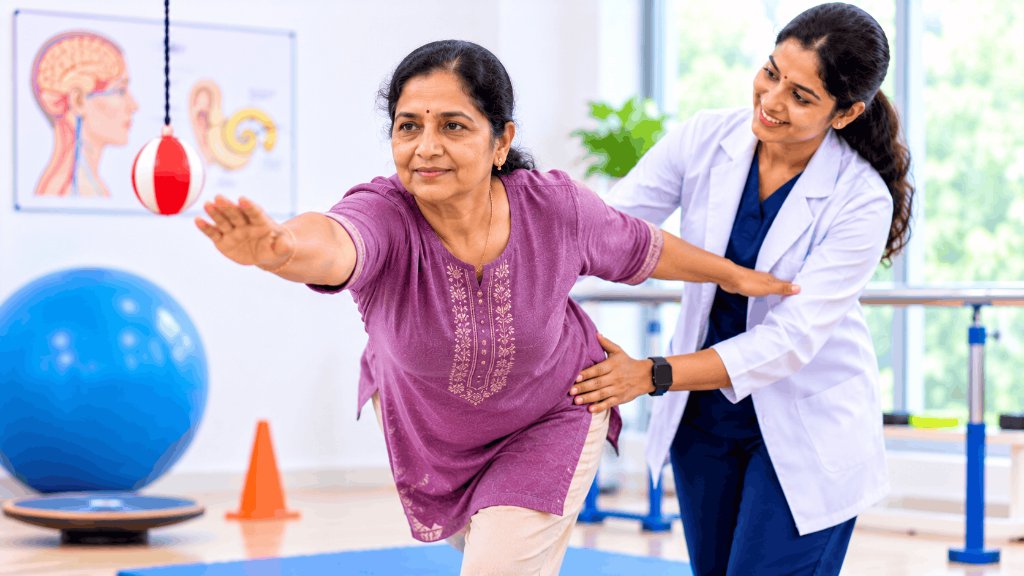
Vestibular Rehabilitation Treatment Process
At Physio Health Care International, vestibular rehabilitation may involve the following stages:
1. Initial Vestibular Assessment
The physiotherapist evaluates balance, posture, eye movements, coordination, walking ability, dizziness symptoms, and movement-related difficulties.
2. Personalized Rehabilitation Planning
An individualized programme is developed according to the patient's symptoms, medical history, vestibular condition, and recovery goals.
3. Gaze Stabilization Exercises
Specific eye and head movement exercises help improve visual stability during head movements.
4. Balance and Coordination Training
Guided exercises help improve postural control, stability, and coordination during standing and walking.
5. Habituation Exercises
Gradual exposure to specific movements may help reduce sensitivity to activities that trigger dizziness.
6. Canalith Repositioning Techniques
Appropriate repositioning manoeuvres, such as the Epley manoeuvre, may be used for suitable cases of BPPV following assessment.
7. Gait and Functional Training
Walking practice and functional exercises help improve mobility, balance, and confidence during everyday activities.
8. Progress Monitoring
The physiotherapist evaluates improvements in dizziness, balance, coordination, and functional movement and adjusts the programme accordingly.
Why Choose Physio Health Care International?
Physio Health Care International provides physiotherapy and rehabilitation support for individuals experiencing dizziness and balance-related difficulties.
Patients can benefit from:
- Individualized vestibular assessment.
- Personalized rehabilitation programmes.
- Guided gaze stabilization exercises.
- Balance and coordination training.
- Appropriate repositioning techniques.
- Walking and functional mobility training.
- Progress-based rehabilitation planning.
- Patient-focused physiotherapy care.
Our goal is to help individuals improve balance, movement control, and confidence through appropriate vestibular rehabilitation.
When Should You Consult a Vestibular Physiotherapist?
Consider consulting a qualified vestibular physiotherapist if you experience recurring dizziness, vertigo, unsteadiness, difficulty walking, or balance problems during head and body movements. An appropriate assessment can help identify possible vestibular difficulties and determine suitable rehabilitation options.
Urgent Medical Alert
Sudden severe dizziness accompanied by difficulty speaking, facial drooping, limb weakness, severe headache, double vision, or loss of consciousness requires immediate emergency medical attention (stroke evaluation).
Book a Vestibular Rehabilitation Assessment
Looking for vestibular rehabilitation in Coimbatore? Contact Physio Health Care International to enquire about personalized vertigo, balance, and dizziness rehabilitation services.
Our team can help identify suitable physiotherapy options based on your symptoms and balance assessment.
Call: +91 97912 49555 / +91 97917 42555
Location: Pappanaickenpalayam, Coimbatore, Tamil Nadu.

Frequently Asked Questions
01
What does vestibular rehabilitation treat?
Vestibular rehabilitation helps manage dizziness, vertigo, balance problems, and movement difficulties associated with inner-ear and vestibular disorders.
02
Can physiotherapy help with vertigo?
Yes. Specific vestibular exercises and repositioning techniques may help manage certain types of vertigo, depending on the underlying cause.
03
What is the Epley manoeuvre?
The Epley manoeuvre is a specific head and body repositioning technique used to treat certain cases of BPPV by moving displaced inner-ear crystals.
04
How long does vestibular rehabilitation take?
The duration depends on the vestibular condition, severity of symptoms, and individual response to treatment.
05
Can vestibular physiotherapy improve balance?
Yes. Balance training, gaze stabilization, and coordination exercises may help improve stability and walking confidence.