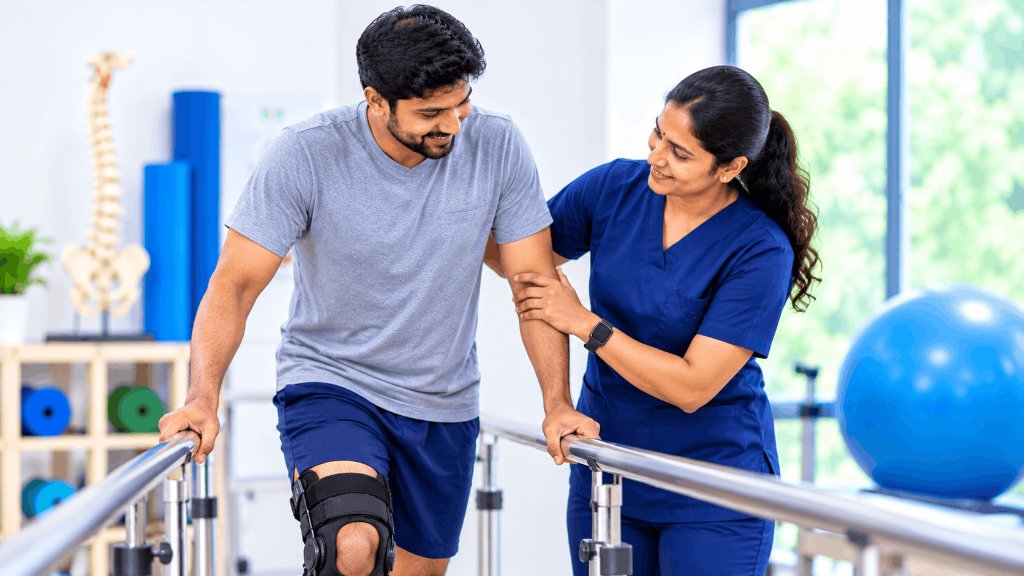
Post-traumatic rehabilitation in Coimbatore focuses on helping individuals recover muscle strength, mobility, balance, coordination, and physical function following traumatic injuries. Accidents, falls, sports injuries, and other physical trauma can affect bones, joints, muscles, nerves, and everyday movements.
At Physio Health Care International, post-traumatic rehabilitation focuses on improving functional movement, restoring physical strength, addressing mobility limitations, and helping individuals gradually return to daily activities through personalized physiotherapy programmes.
Our rehabilitation approach is based on the type of injury, medical condition, healing progress, and individual recovery goals.
What Is Post-Traumatic Rehabilitation?
Post-traumatic rehabilitation is a specialized physiotherapy approach designed to restore physical function following injuries caused by accidents, falls, sports activities, or other traumatic events.
It involves therapeutic exercises, muscle strengthening, joint mobility training, balance exercises, gait training, coordination activities, and functional rehabilitation.
Each treatment programme is customized according to the patient's injury, medical history, physical abilities, and recovery requirements.
Conditions Treated with Post-Traumatic Rehabilitation
Post-traumatic physiotherapy may help individuals manage movement difficulties associated with various injuries, including:
- Road Traffic Accident Injuries: Rehabilitation to improve muscle strength, mobility, balance, and functional movement.
- Fractures: Exercises to restore joint mobility, flexibility, muscle strength, and walking ability after fractures.
- Head Injuries: Rehabilitation to address balance, coordination, and movement difficulties following traumatic brain injuries.
- Spinal Injuries: Physiotherapy to support available movement, posture, muscle function, and independence.
- Soft Tissue Injuries: Exercises to improve flexibility, strength, and mobility following muscle, tendon, and ligament injuries.
- Ligament Injuries: Rehabilitation to improve joint stability, muscle control, and functional movement.
- Joint Dislocations: Physiotherapy to restore appropriate joint mobility and strength following medical treatment.
- Sports Injuries: Rehabilitation to improve strength, flexibility, coordination, and physical performance.
- Nerve Injuries: Exercises and functional training to address muscle weakness and movement limitations.
Common Symptoms After Traumatic Injuries
Traumatic injuries may cause physical difficulties that interfere with everyday activities. Common symptoms include:
- Joint pain and stiffness.
- Difficulty walking or standing.
- Reduced range of motion.
- Swelling around injured areas.
- Poor balance and coordination.
- Difficulty maintaining posture.
- Reduced muscle control.
- Difficulty performing daily activities.
- Reduced physical endurance.
A physiotherapy assessment helps identify these limitations and establish suitable rehabilitation goals.
Benefits of Post-Traumatic Rehabilitation
A personalized rehabilitation programme may help individuals with:
- Improving muscle strength and movement control.
- Supporting joint mobility and flexibility.
- Improving balance and coordination.
- Restoring functional movement patterns.
- Improving walking ability and mobility.
- Supporting physical endurance.
- Improving posture and body stability.
- Developing confidence during movement.
- Supporting independence in daily activities.
Rehabilitation outcomes depend on the type of injury, severity of trauma, healing progress, and individual response to treatment.
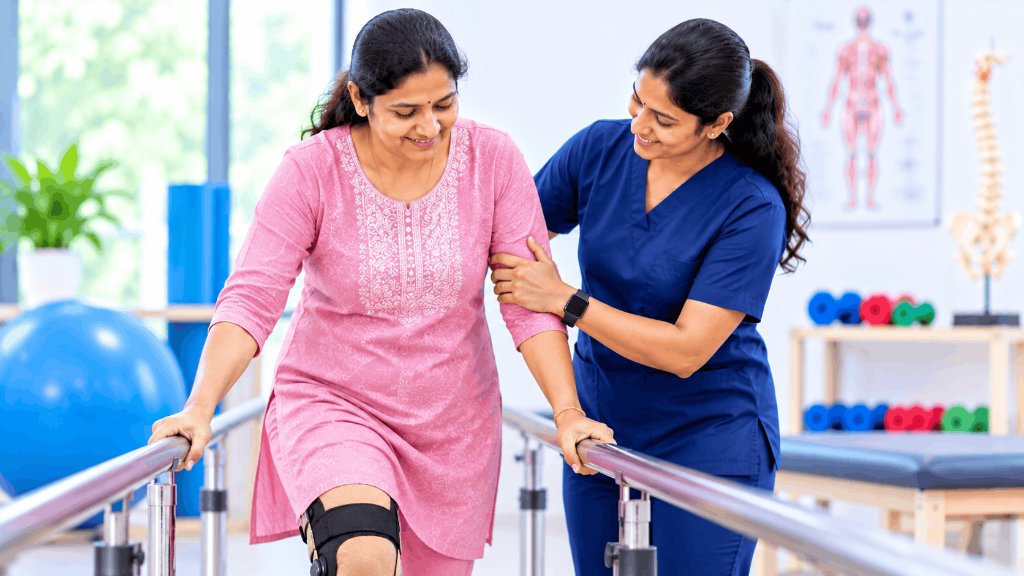
Post-Traumatic Rehabilitation Treatment Process
At Physio Health Care International, rehabilitation may involve the following stages based on the patient's injury and medical requirements:
1. Initial Physical Assessment
The physiotherapist evaluates muscle strength, joint mobility, balance, coordination, posture, walking ability, and functional limitations.
2. Personalized Rehabilitation Planning
An individualized programme is developed according to the injury, medical history, healing stage, and recovery goals.
3. Pain and Swelling Management
Appropriate physiotherapy techniques and movement guidance may help manage discomfort and swelling during recovery.
4. Joint Mobility Exercises
Specific exercises help restore joint movement, improve flexibility, and support gradual recovery.
5. Muscle Strengthening Exercises
Progressive strengthening exercises help rebuild muscle function, improve stability, and support physical recovery.
6. Balance and Coordination Training
Guided exercises help improve stability, posture, body control, and coordinated movements.
7. Gait and Functional Training
Walking practice and functional exercises help patients improve mobility and practise everyday movements such as sitting, standing, and climbing stairs when appropriate.
8. Progress Monitoring
The physiotherapist evaluates improvements in strength, mobility, coordination, and functional abilities and modifies the programme according to recovery progress.
Why Choose Physio Health Care International?
Physio Health Care International provides physiotherapy and rehabilitation support for individuals recovering from traumatic injuries.
Patients can benefit from:
- Individualized physiotherapy assessment.
- Personalized rehabilitation programmes.
- Guided mobility and strengthening exercises.
- Balance and coordination training.
- Functional movement rehabilitation.
- Walking and gait training.
- Injury-specific rehabilitation planning.
- Progress-based physiotherapy care.
Our goal is to help individuals improve physical function, regain mobility, and work towards greater independence through appropriate rehabilitation.
When Should You Consult a Post-Traumatic Physiotherapist?
Consider consulting a qualified physiotherapist if you experience muscle weakness, joint stiffness, difficulty walking, reduced coordination, limited movement, or functional difficulties following an accident or traumatic injury.
Individuals recovering from fractures, ligament injuries, sports injuries, spinal injuries, or traumatic brain injuries may benefit from an appropriate rehabilitation programme following medical evaluation and clearance.
Immediate Medical Precaution
Severe injuries, suspected acute fractures, head injuries with loss of consciousness, or suspected spinal injuries require immediate emergency medical attention before starting physiotherapy. Do not attempt movement exercises prior to diagnostic clearance.
Book a Post-Traumatic Rehabilitation Assessment
Looking for post-traumatic rehabilitation in Coimbatore? Contact Physio Health Care International to enquire about personalized physiotherapy and rehabilitation services following traumatic injuries.
Our team can help you understand suitable rehabilitation options based on your injury, physical limitations, and recovery goals.
Call: +91 97912 49555 / +91 97917 42555
Location: Pappanaickenpalayam, Coimbatore, Tamil Nadu.

Frequently Asked Questions
01
What is post-traumatic rehabilitation?
It is a physiotherapy programme designed to improve muscle strength, joint mobility, balance, coordination, and functional movement following traumatic injuries.
02
Can physiotherapy help after a road accident?
Yes. Physiotherapy may help individuals improve strength, mobility, flexibility, balance, and everyday functional movements following accident-related injuries.
03
Can rehabilitation help after fractures?
Yes. Appropriate physiotherapy can help restore joint mobility, muscle strength, flexibility, and walking ability according to the healing stage and medical clearance.
04
Is physiotherapy helpful after a head injury?
Individuals experiencing movement, balance, coordination, or functional difficulties following a traumatic brain injury may benefit from specialized rehabilitation.
05
How long does post-traumatic rehabilitation take?
The duration depends on the injury, severity of trauma, healing process, medical condition, and individual recovery goals.